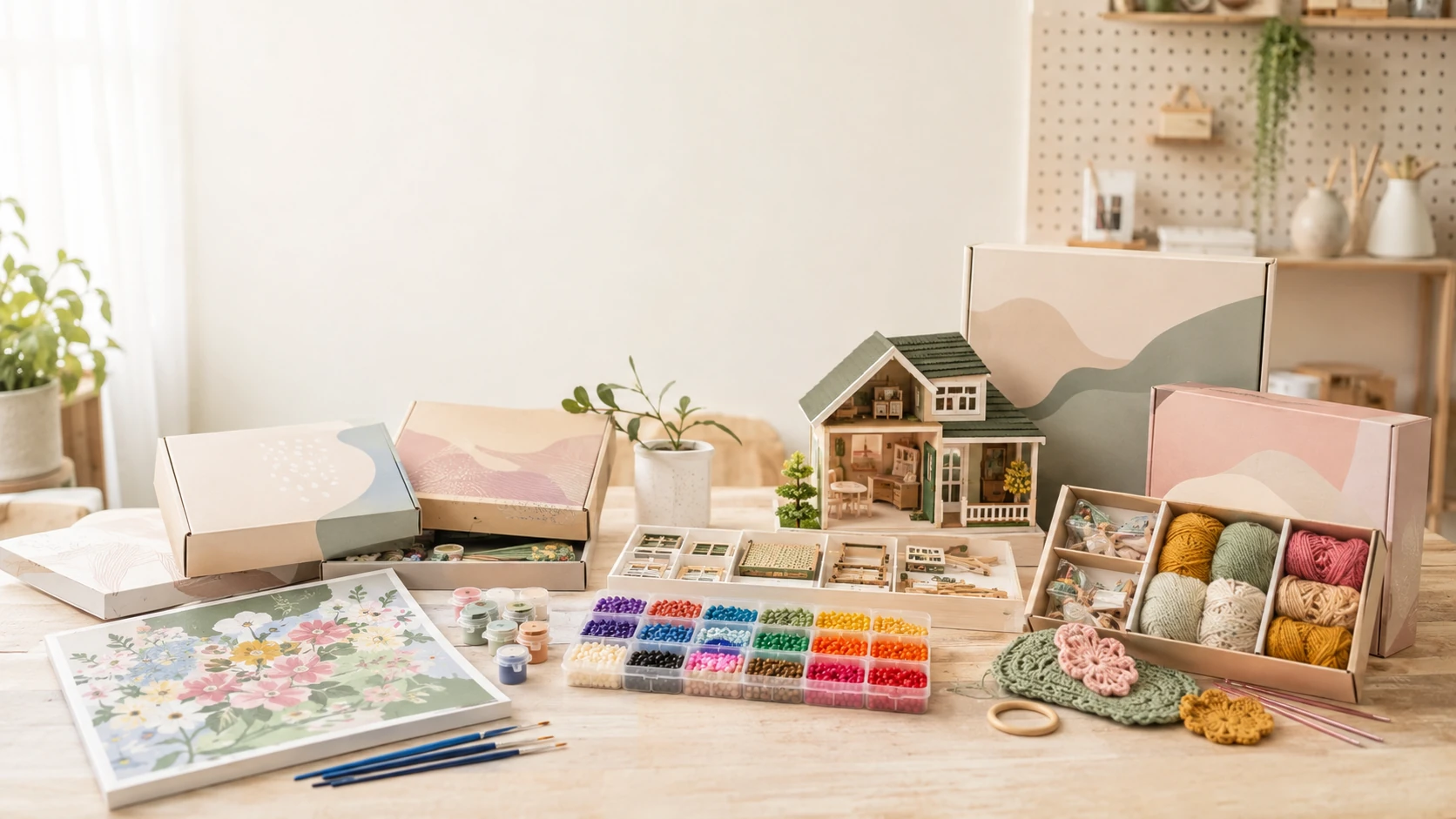
DIY craft kits can serve more than one place in a retail range. A compact bead activity may work as a giftable add-on, while a larger project can suit hobby shelves, creative activity programmes or a seasonal display. Before comparing individual designs, clarify the role the collection should play for the intended customer and sales channel.
1. Begin with the customer moment, not a single product
Retailers, distributors and brands usually get better decisions by starting with the buying moment. Is the range for a creative gift, a school-holiday activity, a hobby customer, a party project or an accessible at-home make? The answer shapes the project scale, visual style, packaging format and the level of guidance buyers should ask to review.
A useful range often brings together a few distinct reasons to buy rather than several similar items. For example, a colourful kids bead kit can support jewellery-making and personalisation, while fuse bead kits create pattern-led activity formats. A broader DIY craft kits wholesale collection can then provide other project types for a balanced display.
2. Build an assortment with clear differences
When buyers compare craft kits, the product format is often as important as the theme. Carry cases, boxed projects, storage-led sets and compact activity packs each communicate a different use case. Look at what is visibly included in the current product information: project materials, pattern or instruction formats, storage components and decorative elements. Confirm the specific contents against the selected item instead of assuming that every design contains the same parts.
Consider how the collection will read on a shelf or online page. A mix of colour stories, project types and pack sizes can make the range easier to navigate. It also gives retail teams options for gift areas, activity tables and regular craft shelves without turning the assortment into a collection of near-duplicates.
3. Make packaging part of the buying decision
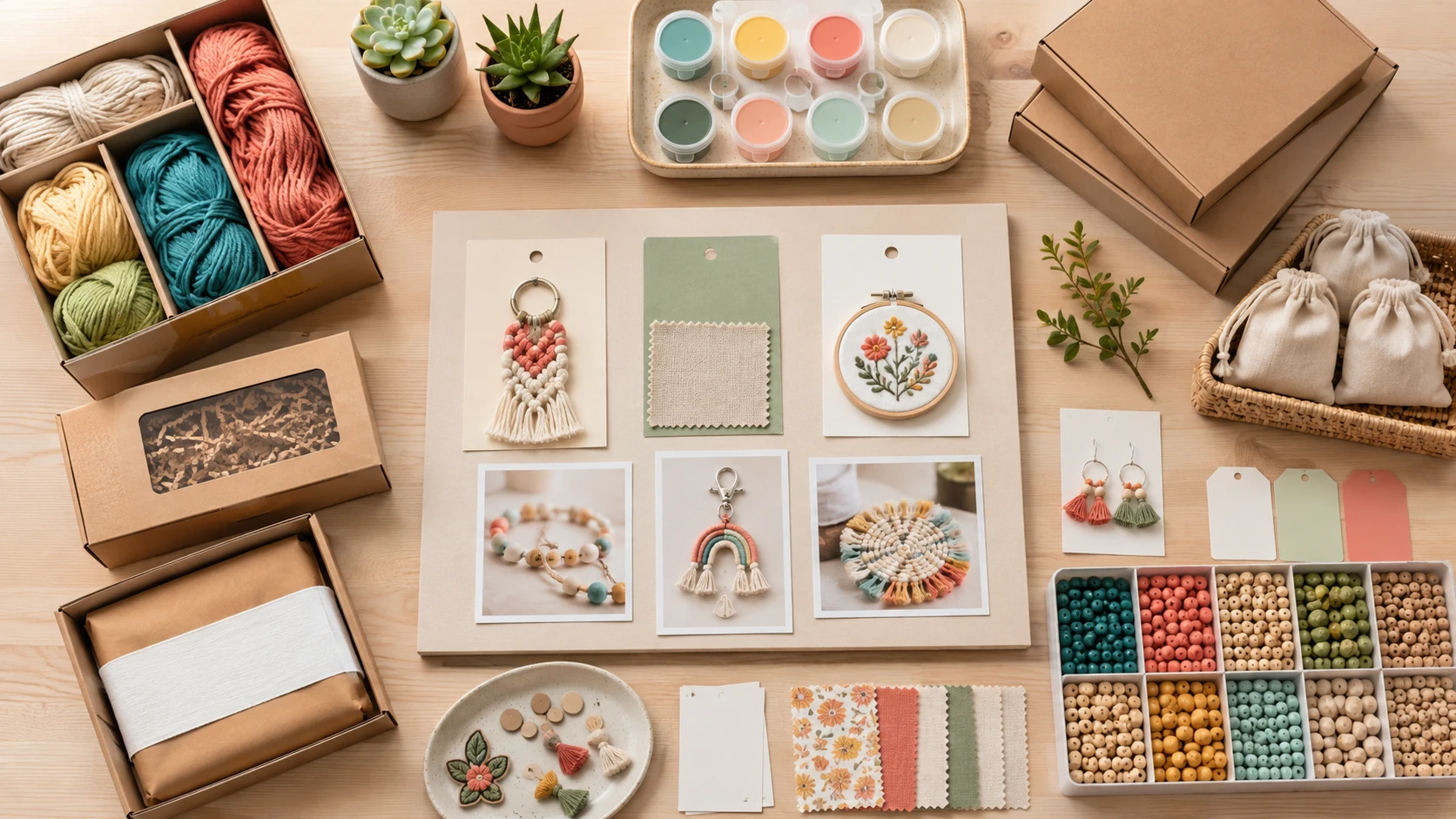
Packaging does more than hold the components. It can set the product's visual position, clarify the activity and support the way a customer understands the kit at first glance. For a branded programme, buyers can discuss the presentation they need before committing to a range: logo treatment, boxes, instructions, barcodes, kit combinations and other project-specific details.
Explore private-label craft kit packaging and brand support when the goal is a branded presentation. For a more specific product direction, OEM craft kit support helps frame the discussion around the concept, components and packaging requirements.
4. Send a brief that leads to useful answers
A practical enquiry gives the supplier enough context to review the relevant options. Include the intended sales channel, the product formats or styles under consideration, target quantities, desired packaging direction and any artwork or reference material. This lets the team discuss the current catalogue, sample availability, packaging choices, MOQ, timing and quotation for the actual request rather than offering generic assumptions.
For buyers who are building a broader assortment, our craft kit sourcing guide for retailers brings together the product categories and planning considerations that support a more connected range.
The most useful craft-kit range is not the one with the most items. It is the one in which every format gives the buyer and the customer a clear role to understand.
Next step: compare the formats that fit your range
Use the collection pages to shortlist products, then send the designs and quantities you are considering. Ningbo Docraft can provide current catalogue, sample, packaging and wholesale enquiry information for the selected direction.